
Alternative Rock
Alternative rock began as a rebellion against convention, a movement born from the underground scenes of the late 1970s and early 1980s where musicians sought freedom from the polished formulas dominating mainstream radio. Rooted in punk’s do‑it‑yourself spirit, it grew from small clubs, college radio stations, and independent labels that gave voice to artists who valued authenticity over commercial appeal. Early pioneers like R.E.M., The Cure, and The Smiths helped shape its foundation, blending introspective lyrics with unconventional melodies and a sense of emotional honesty that stood apart from the glossy pop of the era.
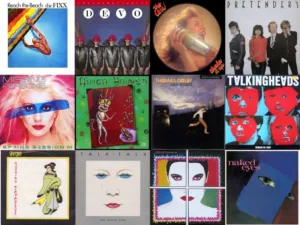
By the mid‑1980s, alternative rock had become a broad umbrella for diverse sounds, from post‑punk’s angular rhythms to the dreamy textures of shoegaze and the raw energy of college rock. It wasn’t a single style but a mindset: music that thrived outside the mainstream, often defined by experimentation and individuality. Underground scenes in cities like Athens, Manchester, and Seattle began to cultivate their own identities, each contributing unique flavors to the growing movement.
The early 1990s marked the genre’s explosion into global consciousness. Bands like Nirvana, Pearl Jam, and Soundgarden brought the grunge sound — a fusion of punk aggression and heavy guitar distortion, to the forefront, turning alternative rock into a cultural phenomenon. Suddenly, what had once been underground was everywhere. The success of these bands opened the door for others, from Smashing Pumpkins and Radiohead to Foo Fighters and Garbage, each expanding the boundaries of what alternative rock could be. The music spoke to a generation disillusioned with excess, offering raw emotion and authenticity in place of glamour.
As the decade progressed, alternative rock diversified further. Britpop emerged in the UK with Oasis and Blur leading a wave of swaggering, melodic revivalism, while American acts explored darker, more experimental directions. The late ’90s and early 2000s saw the rise of indie rock and post‑grunge, as artists continued to reinterpret the genre’s ethos for new audiences. Alternative rock became a permanent fixture in popular culture, not just a style, but a philosophy of creative independence.
In the modern era, alternative rock continues to evolve, absorbing influences from electronic music, pop, and hip‑hop while maintaining its core identity of artistic freedom. Bands like Arctic Monkeys, Muse, and Imagine Dragons have carried its spirit into new sonic territories, proving that “alternative” is less about sound and more about attitude. It remains a genre defined by its refusal to conform, a space where innovation, emotion, and individuality thrive.